
Rowan Ring Spot Virus (MARSV)
Rowan Ring Spot Virus (MARSV) is a plant virus that affects Rowan trees (Sorbus spp.) and other related species. It is characterized by distinct ring-shaped spots on the leaves, which can lead to reduced photosynthesis, weakened trees, and aesthetic damage. You may wonder why the acronym is not RRSV as it should be, well, our American friends have a different common name for Rowan, which is Mountain Ash. Not to be confused with Ash trees which are completely unrelated and a different Genus all together, which is why I think the UK common name is far more sensible, Rowan! I’ll refer to the American common name though this time as that is the disease’s name. In the last 5-7 years around Edinburgh I’ve seen fewer and fewer healthy Rowan’s, some due to this virus, others unknown. Not a good decade for Rowan trees though that’s for sure!
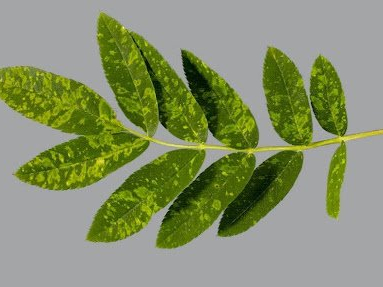
1. Symptoms of Mountain Ash Ringspot Virus
• Leaf Symptoms:
• Yellow or chlorotic ring-shaped spots on leaves.
• Mosaic or mottling patterns.
• Leaves may curl or become distorted.
• Growth Effects:
• Stunted growth in young trees.
• Weakening of branches over time.
• Premature leaf drop in severe infections.
• Fruit Symptoms:
• If the tree produces berries, the fruit may show discoloration or deformities.
2. Transmission of MARSV
• Insect Vectors: Likely transmitted by aphids or leafhoppers, which feed on infected sap and spread the virus to healthy trees.
• Seed & Pollen Transmission: The virus may spread through infected seeds or pollen.
• Mechanical Transmission: Can be transmitted through contaminated pruning tools or human handling.
3. Management and Control Strategies
A. Cultural Control
• Remove Infected Leaves & Branches: Prune and destroy affected plant parts to prevent further spread.
• Sanitize Tools: Disinfect pruning tools with bleach or alcohol to avoid spreading the virus.
• Use Certified Disease-Free Plants: Ensure new trees are virus-free before planting.
B. Vector Control
• Manage Aphid Populations: Use insecticidal soap, neem oil, or natural predators (e.g., ladybugs).
• Reduce Leafhopper Activity: Avoid planting susceptible species near infected areas.
C. Resistant Varieties
• Currently, no resistant mountain ash varieties are known, but selecting healthy and well-adapted trees can help.
D. Chemical Control
• Insecticides: If aphids or leafhoppers are present in large numbers, insecticides may help reduce virus spread.
4. Impact of MARSV on Mountain Ash Trees
• Aesthetic Damage: The virus affects the ornamental value of mountain ash, making it less desirable in landscapes.
• Tree Health Decline: Chronic infections may weaken the tree over time.
• Limited Economic Impact: Unlike viruses affecting food crops, MARSV primarily impacts ornamental and wild trees.


