
Sudden Larch Death
Sudden Larch Death (SLD) is caused by the pathogen Phytophthora Ramorum, a water mould responsible for Ramorum disease in Larch trees (Larix species). It leads to rapid needle browning, branch dieback, and tree mortality. The disease was first identified in the UK in 2009 and has severely impacted Larch populations, particularly in forests and plantations but also in residential gardens.
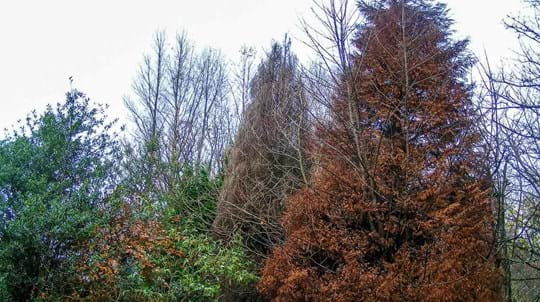
1. Symptoms of Sudden Larch Death
A. Early Symptoms
• Needle discoloration, turning yellow, then reddish-brown.
• Wilted or sparse foliage, with some branches dying back.
• Excessive resin bleeding (dark, sticky sap oozing from infected bark).
B. Progressive Symptoms
• Cankers on branches and trunk, which ooze black resin.
• Rapid dieback, often affecting entire trees within one season.
• Needle shedding, leaving trees bare.
C. Advanced Infection
• Widespread tree death in affected areas.
• Increased vulnerability to secondary pests and fungi.
2. Causes and Transmission
• Wind-blown spores spread the pathogen in moist, cool conditions.
• Rain splash and water movement contribute to local spread.
• Infected plant material (such as wood, bark, and soil) can introduce the disease to new areas.
• Tree-to-tree contact accelerates the spread in dense larch plantations.
3. Trees Affected
• Larch species (Larix Kaempferi, Larix Decidua, Larix Sibirica).
• Can also infect Oak and much less readily Beech, Sweet chestnut, Rhododendrons, and other shrubs.
4. Management and Control Strategies
A. Prevention
• Avoid Planting in Infected Areas: Do not introduce larch saplings where P. ramorum has been detected.
• Sanitize Tools & Equipment: Clean tools after working in affected areas.
• Monitor & Report Symptoms: Early detection is key to containment.
B. Managing Infected Trees
• Tree Removal: Infected larch trees must be felled and destroyed to prevent further spread.
• Burn or Deep Bury Infected Material: Do not transport infected wood or plant debris.
• Control Nearby Host Plants: Remove infected rhododendrons or understory vegetation that can harbor the pathogen.
C. Chemical Control
• No effective fungicide exists for large-scale control.
• Fungicides like phosphonates may slow progression but do not eliminate the disease.
5. Impact of Sudden Larch Death
• Severe Tree Loss: Large-scale larch die-offs impact forestry and timber industries.
• Habitat Disruption: Loss of larch trees affects wildlife and ecosystems.
• Regulatory Quarantines: Affected areas may face movement restrictions for wood and plant products.


